
Perspectives: Natasa Janicijevic on the Impact of Visibility
Authored by Dr Beth Charlton
To celebrate the launch of our LGBTQ+ Women of Impact 2025 list, we’ve been in conversation with some of the trailblazing women making huge strides in raising the visibility and representation of LGBTQ+ women in their organisations. Over the next few weeks, we’ll be spotlighting different Women of Impact as part of our new editorial series. Spotlighting the personal experiences and achievements of individual women, we’ll be unpacking themes of visibility, representation, role-models, safe spaces, contemporary challenges and barriers to inclusion for LGBTQ+ women in the workplace.
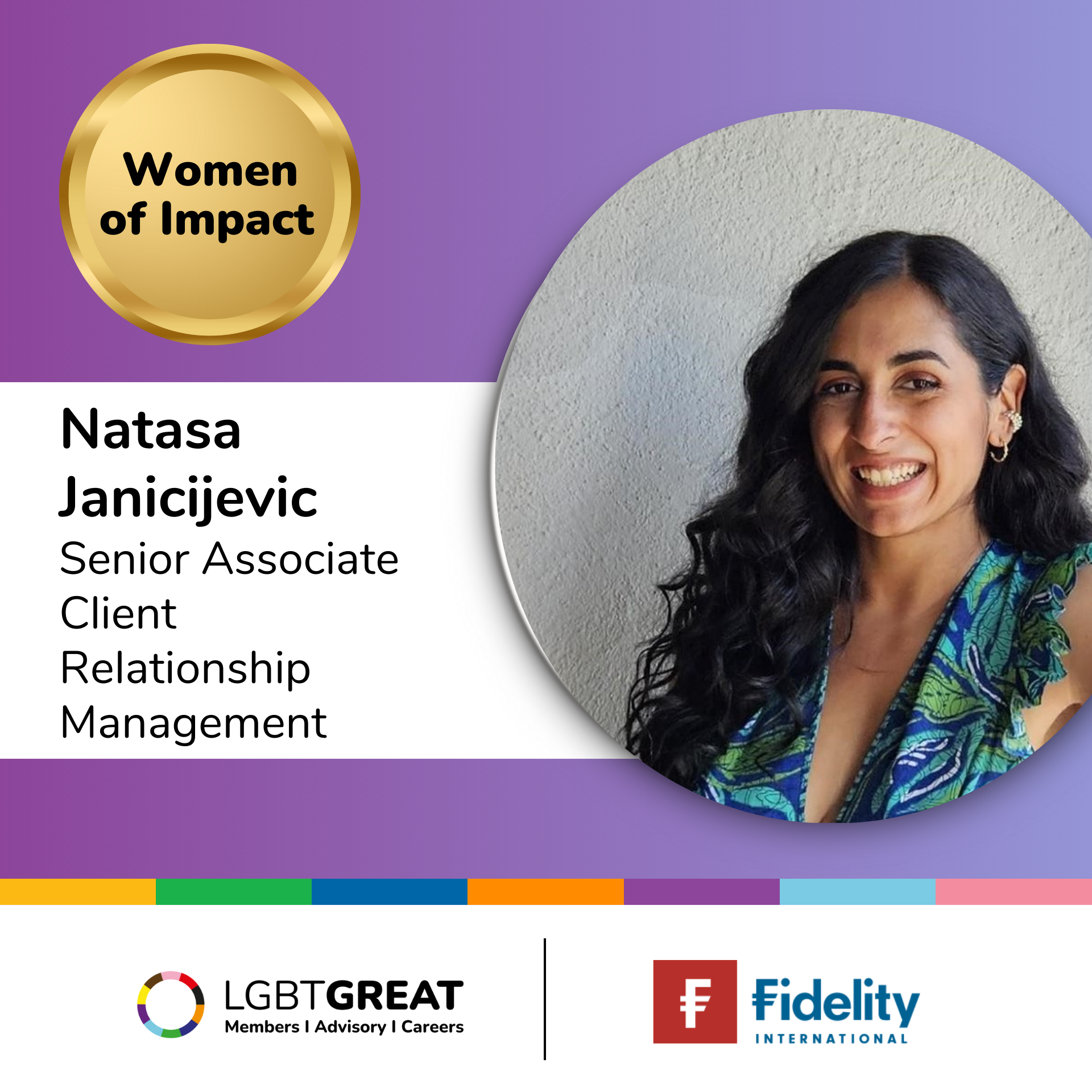
For this week’s instalment, I spoke to Natasa Janicijevic, Fidelity International Luxembourg’s LGBTQ+ lead, who has been driving initiatives that foster visibility, inclusion and representation across her organisation. Passionate about advocating for the less visible members of the LGBTQ+ community, Natasa believes in creating spaces where people feel able to be unapologetically themselves. Talking education, challenging senior leaders to do more, and the crucial impact of visible role models, Natasa unpacked the importance of building inclusive workplaces where LGBTQ+ women feel they belong.
Reflecting on her career journey, Natasa spoke of the significant impact that having a visible role model and mentor, who was also an LGBTQ+ woman, had on shaping her workplace experience. She recalled that having someone to look up to and identify with had a ‘huge impact’, making her feel seen, valued and supported in her work, consequently improving her day-to-day experience in the organisation.
She was a big senior leader in the company. She had a big influence to bring more light to our community and visibility and credibility. She helped me tailor one of our events as well, and it it's just priceless to have someone like her that not just supports the inclusion but also champions it…it made me feel seen and valued that finally we have someone that was representing the LGBTQ women in the workplace. And although she's not anymore working for fidelity, she had a huge impact left that I will always remember.
Here, Natasa’s words make clear the substantial impact that LGBTQ+ women in senior roles can have, allowing others to feel better represented, more visible and advocated for. Natasa is not alone in recognising the importance of role models in senior roles; 69% of the LGBTQ+ women surveyed as part of our 2023 Seeing is Believing research report, which explored the impact that role models have on LGBTQ+ talent, agreed that having visible role models at more senior levels was important. As Natasa emphasised during her interview, when LGBTQ+ women are visible in senior roles, ‘It sends a whole different narrative and a whole powerful message when you see the representation at the top’. Natasa explained how this visibility was even more pertinent when it came to seeing other women of colour in leadership positions and in the wider workplace.
Especially for me as a person of colour it's even much more important to see more women in the POC spectrum that I can feel more seen and that I can identify myself with. Because it sends a message that being authentic is OK and this is what I would love to see more and more of in the workplace, yeah.
For Natasa, increasing the representation and visibility of LGBTQ+ women is thus a vital step in building workplaces that feel truly inclusive and reflective of the diverse people who work there. When I asked how she thought this goal could be achieved, Natasa explained that genuine inclusivity must be embedded within organisational culture, going beyond empty statements and words that often aim to communicate, but don’t always foster, inclusive cultures.
I feel nowadays, especially in the corporate world - I can especially talk here about Luxembourg - that a lot of companies talk about inclusion. That's great, but it feels very often like branding than a real change, because for me to make a great workplace more inclusive it has to go beyond just statements, it needs to be part of the culture. Like for me, that means fair hiring, promotion practises, leaders being held accountable and creating also a space where LGBTQ+ women feel more safe to speak up.
Natasa emphasised that organisational inclusion must be a lived reality every day, fostered within the workplace, not merely communicated or marketed on annual visibility days or pride celebrations. Offering advice to the role that senior leaders can play in this task, Natasa urged executives and managers to go beyond allyship and workplace policy, encouraging them to actively champion, celebrate and raise the voices of LGBTQ+ women.
I think they should go a bit more beyond the policies like OK, showing up as allies is nice and fine. But support making the women a bit more visible, like the initiative that LGBT Great is giving now, giving visibility to women in those roles, and to also grow into leadership roles…And I think as well that we should be more celebrated. We are not being celebrated enough - success stories and LGBTQ voices should be heard more.
Later in the interview, Natasa explained just how powerful it can be when LGBTQ+ voices are heard and amplified in the workplace. Drawing on examples from the valuable work she has done at Fidelity International, such as hosting educational talks on topics such as Pinkwashing, Bisexuality and Bi Visibility Day, Natasa’s words reveal the impact that the sharing of personal experiences can have on promoting inclusion, understanding and allyship amongst colleagues.
Those conversations aren't easy, I'm aware of that, but I realised what a big impact that they had on people when, especially you share more personal insight and speak about it openly, it kind of opens also more-, it creates a space for honesty and change and conversation. I saw even the ripple effect that it can have on people that are not really allies or didn't see themselves as allies before. But it opens up a kind of a safe space for them to also speak up and feel safe to start a conversation and ask questions.
By creating space for LGBTQ+ voices and experience to be heard, Natasa’s actions directly impacted workplace culture in her organisation, encouraging productive conversations and fostering greater understanding about the lived experiences of LGBTQ+ people.
I had very often people that would come up with a question be like ‘I'm so sorry, I don't know if [this is a stupid question]’ and I'm like no there is no stupid questions. Please I feel actually honoured that you feel safe enough to come up with that question so I can talk to them openly and tell them how we see things. And when I hear that someone tells me that the discussion like I had about Bi Visibility Day people changed their perspective or helped them to understand more, that means everything to me. Like those moments remind me every time how important it is to never stop this conversation and never stop educating people.
Centring and elevating the voices of LGBTQ+ people, then, can have an instrumental effect on the learning journeys of individuals and the consequent cultivation of workplaces and organisations that are open, inclusive and foster feelings of belonging. As Natasa stresses, continuing to make space for the sharing of personal experience, and providing opportunities for conversation and learning, is essential in building workplaces where LGBTQ+ women can be unapologetically themselves.