
Perspectives: Older Queers Voices – Our Interview with Raga D’Silva
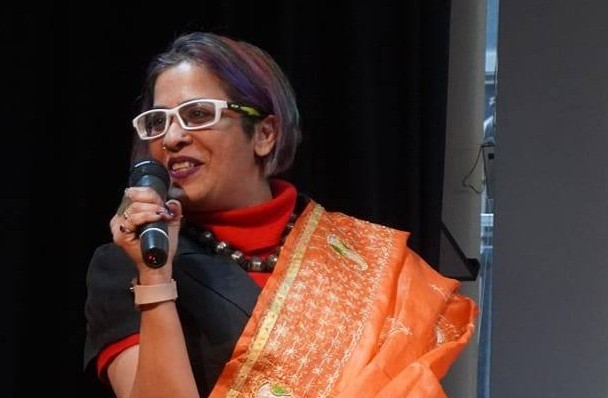
Authored by Dr Beth Charlton
Pride Month special - Perspectives with speaker, author, LGBTQ+ champion and podcaster Raga D’Silva.
Pride is marked every June in commemoration of the Stonewall riots that began on the 28th of June 1969 in New York City. Following a police raid on the Stonewall Inn – a popular gay bar situated in Greenwich Village in Lower Manhattan – a series of riots and demonstrations took place, with patrons of the bar protesting against police harassment, mistreatment and discrimination. The events of the Stonewall riots have been pinpointed as a watershed moment in LGBTQ+ history, frequently attributed to the beginnings of the modern LGBTQ+ movement. The first Pride March took place to commemorate the beginning of the riots one year later and has since turned into a celebration that takes place annually across the globe.
This year, as we have witnessed challenges to LGBTQ+ rights and protections in some countries, Pride Month – and the visibility it brings – feels more important than ever. Whilst Pride today is often associated with colourful, loud and joyful marches and parades, it is important to remember its origins. More than a moment of celebration, Pride Month offers the opportunity for us to come together, draw attention to the challenges some members of LGBTQ+ community continue to face, and strive for a fairer, more inclusive world.
For businesses, organisations and employers, Pride Month offers the opportunity not only to show up and provide visible support, but to reaffirm commitment to embedding Pride into a holistic, year-round approach to leadership, inclusion, talent and organisational culture. The most effective organisations make Pride part of something bigger all year round – an ongoing journey, connecting it to leadership and culture every day.
For this Pride Month special of our Perspectives Editorial Series, we spoke to the brilliant speaker, author, LGBTQ+ champion and podcaster Raga D’Silva. Following the success of the Older Queer Voices festival, attended by our own CEO and hosted on the 3rd of June, we caught up to talk all things inclusion, building intergenerational community, and the importance of raising the voices of older LGBTQ+ people. For Raga, Pride Month is an opportunity to reflect on the progress that has been made in the six decades since Stonewall, acknowledge those who made it possible, and remind ourselves that progress requires ongoing – year-round – commitment.
Navigating Multiple Identities, Invisibility, and Authentic Inclusion
Reflecting on her journey since starting her career, Raga described the environment she found herself in when she first entered the workforce.
When I began my career, conversations about LGBTQ+ inclusion were virtually non-existent. In many workplaces, being openly LGBTQ+ could have significant professional consequences.
As someone who was not yet out myself, I spent years carefully managing different parts of my identity. Success often felt tied to fitting in rather than standing out. There were very few visible LGBTQ+ role models, and certainly very few older LGBTQ+ people whose experiences we could look to for guidance.
With limited visibility of LGBTQ+ elders in the workplace, coupled with the understanding that being open about your LGBTQ+ identity could be detrimental to career progression, concealing an important part of herself was the only option for Raga. She went on to explain the toll that managing the different parts of her identity had on her experience at work.
One of the greatest challenges was not overt discrimination but invisibility. For many years, I carried the emotional burden of hiding an important part of myself. That takes energy. It affects confidence, relationships and your ability to bring your whole self to work.
As a woman, an immigrant and someone who came out later in life, I have also experienced the complexities of navigating multiple identities simultaneously. These experiences taught me the importance of creating workplaces where people do not have to edit themselves in order to succeed.
Raga’s experience of navigating multiple identities echo the findings of our research into the experiences of LGBTQ+ women in the workplace. The accounts of our participants revealed that due to the dual impact of misogyny and homophobia, many LGBTQ+ women decide not to come out at work to minimise the potential of increased discrimination. This experience is further exacerbated for some LGBTQ+ women who occupy further marginalised identities, such as but not limited to, race, class, disability and age presenting further potential for discrimination in the workplace.
Raga’s own experience of feeling unable to bring her whole self to work not only taught her the importance of creating psychologically safe and truly inclusive workplace environments, but it also inspired her to help others, building a career as an inclusion advocate, speaking globally on inclusive leadership, authenticity, unconscious bias and belonging.
Six years ago, very few people knew I was a lesbian. Today, I use my own journey and the power of storytelling to help others feel seen, heard and valued. That transformation has shaped both my personal mission and my professional work.
Working at the intersection of business, inclusion and storytelling, Raga strives to make lasting change for LGBTQ+ people at work. Considering the greatest barriers to inclusion that continue to impact the LGBTQ+ community in today’s workplaces, Raga pointed to the persistence of performativity in many organisations; whilst businesses may outwardly communicate visible support for LGBTQ+ inclusion, she explained that this does not always translate into feelings of belonging for LGBTQ+ employees.
The biggest challenge today is moving beyond performative inclusion towards genuine belonging.
Many organisations have policies, networks and visible support during Pride Month, which is important. However, inclusion is ultimately measured by everyday experiences. Do people feel safe to be themselves? Do they feel valued? Can they see pathways to leadership? Do they feel they belong?
For trans and non-binary people in particular, there are growing challenges created by political and social polarisation. Organisations must remain committed to creating environments where everyone is treated with dignity, respect and humanity.
Inclusion is not about ticking a box. It is about creating cultures where people can thrive without having to hide who they are.
Going beyond gestures of visible support during LGBTQ+ annual events and moving the focus toward creating authentically inclusive environments that impact the day-to-day experiences of LGBTQ+ employees is paramount, particularly in times of ‘political polarisation’.
To find out more about how you can show up for the LGBTQ+ community all year round, get in touch with is on info@lgbtgreat.com to request a copy of our Pride365 member toolkit.
Older Queer Voices, Honouring the Past, and Looking to the Future
Whilst looking forward and continuing to strive for equality is undoubtedly an important mission, Raga reminds us of the equally significant task of reflecting upon where we’ve come from. She explained that whilst ‘enormous progress has been made’ over the past few decades, it is nevertheless ‘important to remember how recently many of these changes have occurred and how hard people fought to make them possible’. As we celebrate Pride Month this June, it is integral that we not only look to the future, but remember the past and the people who fought for the rights and protections we have today. Raga has taken this task into her own hands, raising the voices of older LGBTQ+ people and fostering intergenerational community through Older Queer Voices.
A year ago, I founded Older Queer Voices to address a significant gap in our community. While there has been growing visibility for LGBTQ+ people, the voices and experiences of older LGBTQ+ people are often overlooked. Yet this generation carries extraordinary stories of resilience, activism, survival and change.
What began as a simple idea has quickly grown into a movement. Through podcasts, storytelling, advocacy, roundtables and community events, we are creating spaces where older LGBTQ+ people feel seen, heard and valued. We are also building meaningful connections between generations, helping ensure that important histories, lessons and lived experiences are not lost.
What has been particularly encouraging is the growing interest from organisations, employers and institutions. More leaders are recognising that age, ageing and the experiences of older LGBTQ+ people need to be part of inclusion conversations. Organisations are listening, engaging and increasingly asking how they can better support and understand this often overlooked community.
In celebration of the Older Queer Voices one year anniversary, their first inaugural Festival took place on the 3rd of June, bringing together people from across generations, identities and backgrounds for a day of powerful conversation, storytelling and connection. Reflecting on this experience, Raga explained the impact and momentum the occasion inspired.
One of the things I am most proud of is the diversity that was present throughout the festival. We brought together people from different ages, cultures, ethnicities, gender identities, lived experiences and professional backgrounds. It reflected the richness and diversity of our community in all its forms.
The response exceeded all expectations. Since the festival, we have received significant interest from organisations, community groups and businesses wanting to continue the conversation. That tells me there is a real hunger for intergenerational dialogue and a growing recognition that older LGBTQ+ voices have an essential role to play in shaping the future of our communities.
For Raga, Pride offers a moment from which to continue this important work, reflecting on the progress that we’ve made; whilst June marks an opportunity to celebrate, it is also imperative that we honour our LGBTQ+ history, acknowledge the progress that has been made, and commit to continuing to strive for equality.
For me, Pride is both a celebration and a responsibility. It is a celebration of authenticity, visibility and the extraordinary progress that has been made. But it is also a reminder of those who came before us, often at great personal cost, to create the freedoms many of us enjoy today.
As someone who spent much of my life hidden, Pride has a deeply personal meaning. It represents the freedom to live openly and authentically, something that many people around the world still cannot do safely.
Pride matters because rights can never be taken for granted. It reminds us that visibility is powerful, community is essential and progress requires ongoing commitment.
Raga’s words remind us to ensure that the momentum of Pride Month 2026 is leveraged to inspire and shape great inclusion work all year round. By showing up consistently, centring employee safety and wellbeing, and taking meaningful steps to build authentically inclusive workplaces, we can all help to unlock what is possible for LGBTQ+ people, their colleagues and communities to feel seen, valued and part of something bigger at work. Because when your people prosper, everyone thrives.