
Perspectives: IDAHOBIT – In Conversation with Emma Cusdin
Authored by Dr Beth Charlton
On the 17th of May 2004, International Day Against Homophobia, Transphobia and Biphobia (IDAHOBIT) was founded, aiming to bring together individuals, organisations and governments across the globe to raise awareness of the issues facing LGBTQ+ people and to advocate for the laws and policies needed to protect their rights.;This year’s theme – ‘at the heart of democracy’ – seeks to remind us that truly democratic societies must be grounded in justice and freedom for everyone. At a time when LGBTQ+ rights and protections are increasingly being challenged, this sentiment feels more pertinent than ever.
In recent years, amidst shifting social and political contexts, we have witnessed the increased scrutiny of LGBTQ+ rights in many countries. Alongside the removal of legal protections, negative media coverage and more visible public debate in many nations, LGBTQ+ communities worldwide have faced increasing levels of discrimination, harassment and violence. In the UK, the past 5 years has seen a 20% increase in homophobic hate crimes, and a 50% increase in transphobic hate crime. Similar trends have been recorded by the European Commission who reported a rise in anti-gender and anti-LGBTQ narratives has led to an increase in in LGBTQ-phobic hate, harassment and physical attacks since 2019.
IDAHOBIT offers a moment for pause, allowing us to address the ongoing struggles the LGBTQ+ community continues to face, and reflect on how we can step up and enable change.
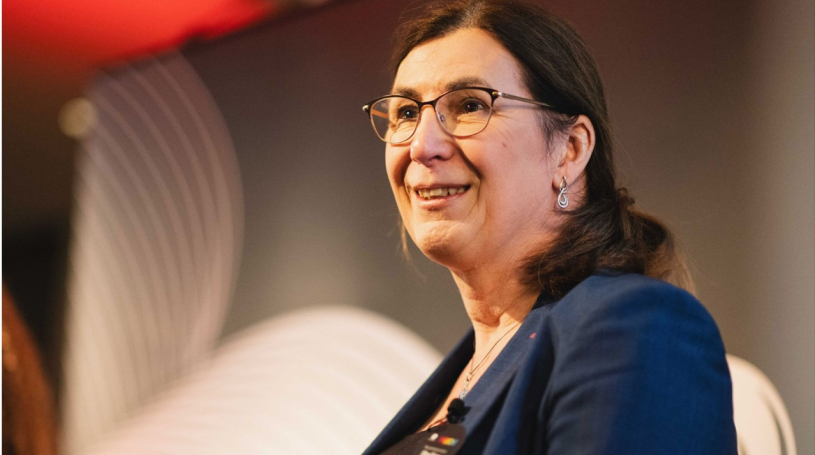
To mark IDAHOBIT 2026, we’re thrilled to share our conversation with the inspiring Emma Cusdin. A champion of trans and non-binary rights with over 30 years’ experience in human resources, Emma is an openly trans woman who uses her passion to raise awareness of and promote inclusion for the trans and non-binary community. Alongside her wife Rachel, Emma is a director of Global Butterflies, an award-winning LGBT inclusion consultancy that works across sectors and countries, recognised for their contribution and commitment to promoting trans and non-binary inclusion. Delving into her career experience, Emma talked all things coming out, imposter syndrome, the powerful role senior leaders can play in promoting inclusion, and the importance of ensuring that awareness dates don’t become a tick box exercise, but are incorporated into a year-round inclusion strategy that works to improve the experiences of all LGBTQ+ people at work.
The Impact of LGBTQ+-Phobia in the Workplace
Reflecting on her career, Emma described the male-dominated and heteronormative environment she found herself in when she entered the world of financial services. Recalling what the workplace was like for the LGBTQ+ community at the time, Emma outlined the pervasive homophobia and transphobia – no doubt a product of wider societal attitudes at the time – that was normalised across departments and levels of seniority.
So, when I first started my career – and as you can see, I've got a few grey hairs – it was a very different world. I first went to work in 1989. So, the world was very different. In terms of outside the workplace, HIV/AIDS and the political environment [impacted the lives of LGBTQ+ people]. But in the workplace – I worked in a very heteronormative, male dominated part of financial services. And it still had an element of culture which was directed towards men and cisgendered men. So, it's a lot of alcohol, a lot of boozing, a lot of...what would now be called very inappropriate banter, lots of sexism. And so, for me, you know, being an LGBT person was incredibly scary because how do you come out in that environment when there are homophobic jokes being made, there are transphobic jokes being made, and even by the most senior people, and it's considered okay and normal. Even within human resources, that culture filtered down.
With the arrival of the HIV/AIDS crisis in 1981, and the implementation of legislative homophobia in the form of Section 28 in 1988, the period in which Emma found herself entering the workplace was one marked by turbulence and discrimination for the LGBTQ+ community. The hostile social and political environment of late 1980s that unfolded in wider society, was compounded within the workplace by the absence of workplace protections for the LGBTQ+ community; indeed, protections against harassment and discrimination based on trans identity and sexual orientation wouldn’t be introduced until 1999 and 2003 respectively. Beginning her career against this backdrop, Emma spoke of the very real impact this had on her.
So, I hid, I covered, as many people do. We cover, we hide, we try and fit in, we try and, you know, be part of something because, this is work, you get payment and you get a salary. And so therefore it's quite hard to put that at risk. So, I covered and I covered for many years and I covered deeply. And so, you know, it took me a long time to have the courage to go ‘this is me’.
Unable to be her authentic self in the workplace, Emma explained the cost that hiding your real self comes at.
[Covering] comes at an emotional cost, it comes at a physical cost…because you're covering, you're doing, as my wife says, you're doing an Oscar-winning performance every day to how you think people perceive you. And I'm really pleased that things have moved on. Yes, there are still homophobic, biphobic and transphobic things happening in our workplaces, which is awful, but are they to the same extent? I would probably suggest not, but they still impact individuals, terribly, so you know we still have work to do.
Imposter Syndrome, Self-Imposed Barriers, and the Importance of Senior Leaders
In 2009, feeling that the time was right for her, Emma took the decision to come out at work. Despite working in a team where inclusion or the LGBTQ+ community were never mentioned, she believed she had a supportive line manager whom she could trust; over a lunch, Emma shared her news and was met with the acceptance and support she’d hoped for. Reflecting on how things changed for her in the workplace after this moment, she explained that many of the challenges she faced – or at least those that impacted her most – were self-imposed and internalised.
I think the challenges, dare I say, are in my own head. I think a lot of people who are in our community, and especially in my experience, trans and non-binary people, we're very good at self-analysis and sometimes we overanalyse. And as a result, that has consequence. I suffer hugely from imposter syndrome, having come out you feel like I'm not good enough and therefore you don't put yourself forward or you're not as vocal as you should be.
[So] how do you step forward and be you – even though you've got people who are supporting you? And I think for me, the biggest challenge for me has always been those internal challenges. So, you know, we are, I often talk to some of my trans and non-binary colleagues and friends who are similar levels. And we often talk about, we always end up in the role one below the one we probably would have been had we not transitioned.
Emma is certainly not alone in her experience. A 2022 study conducted by Indeed found that LGBTQ+ people feel the impacts of imposter syndrome more deeply than cis, straight people. From those surveyed, 30% of LGBTQ+ people said that they frequently experienced imposter syndrome at work. As Emma alluded to above, this was further exacerbated for trans and nonbinary people; a staggering 64% of trans respondents reported dealing with imposter syndrome at work frequently, drastically higher than the all-respondent average of 15%.
Whilst imposter syndrome and other ‘self-imposed’ barriers can be difficult to overcome or circumvent, Emma explained the pivotal part that role models can play in mitigating their impact on LGBTQ+ people at work. Speaking of the support, allyship, mentoring and guidance she received from one role model in particular, Emma emphasised that the actions of others can go a long way in helping you to embrace your authentic self in the face of imposter syndrome, explaining that ‘having somebody who can help and support you stepping forward and giving you that energy to really blossom and be yourself is just awesome’. For Emma, senior leaders play a key role in this journey toward self-acceptance and confidence building, as their allyship and mentoring has the potential to directly improve the experiences of LGBTQ+ employees. Pondering the ways in which senior leaders can embrace inclusion and diversity and support their LGBTQ+ employees, Emma proclaimed that the ‘greatest thing senior leaders and allies can do is give the gift of time’. Drawing on her own experience, she explained this further.
One situation deeply struck me, and probably not for the individual, but for me it really did. So, one day my line manager when I was at Aviva just sat down with me and said, ‘Emma, I know you're an LGBT employee. How can I be a better ally to you? Let's have a cup of coffee. What am I doing well? What could I do better? Tell me about some of the challenges that you're facing.’ And for me, you know, an hour later, we were still having a cup of coffee and still talking. But for me, the fact that somebody asked, sat down with me, took time out their diary and deeply listened, I think, you know, had a huge positive impact on me. And I think often our allies and senior leaders underestimate the impact of just saying, I see you as you see you and I'm here to help and support you.
Here, the willingness of a leader to set aside time, ask questions, and learn had a profound impact on Emma’s workplace experience. Indeed, an openness to learn was re-iterated by Emma as of being an important skill for senior leaders to foster. Whilst Emma has witnessed some leaders being reluctant to discuss LGBTQ+ topics because ‘it’s not their lived experience’ or ‘they feel they need to be perfect’, she urged them to get involved, lead with curiosity and act with humility.
Inclusive leadership [is about] stepping into things, which are not our lived experience, and stepping into things that we might not know a great deal about, but let's do it with some vulnerability, humility, and forgiveness, and also be human. I think often leaders expect they need to have all the answers when they speak to their teams. No, they don't. Just be a decent human being and be open to learn.
Reflections on IDAHOBIT & Year Round LGBTQ+ Inclusion
As Emma discussed the work she does at Global Butterflies – the business she leads alongside her wife that helps senior leaders and organisations on their inclusion journey – she pointed to the importance of workplaces embracing and promoting consistent, year-round authentic inclusion. Gesturing toward the performativity that often accompanies key dates in the calendar such as Pride, Trans Day of Visibility, or IDAHOBIT, Emma gave a warning to those that treat inclusion as a ‘tick box’ exercise, explaining that ‘people are starting to see through performative actions’. Rather than treating these dates as standalone inclusion efforts, Emma encouraged senior leaders and organisations to incorporate the recognition of such dates into a wider inclusion strategy that consists of ‘small steps you can continually make throughout the year’; it is this, she explained, that truly makes a difference to how LGBTQ+ people experience the workplace, ‘especially when the external noise is loud’.
[IDAHOBIT is an] opportunity to spotlight things. Homophobia, biphobia and transphobia have huge negative impacts. We often talk about culture is when nobody's watching or culture is defined by the things that we tolerate. So, for me biphobia, transphobia and homophobia have a corrosive impact on any organisation. These are days to highlight those things, to actually focus in on those things and say, for this day, we spotlight things. However, throughout the year, we continue to do the work to challenge those things. Whether that's through training tools, whether it's through events, whether it's through those intersectional pieces of work that we do when we talk about all elements of our community to build the inclusive culture.
As Emma attests, IDAHOBIT serves as an important means of reflecting on how far we’ve come, whilst highlighting the homophobia, transphobia and biphobia that continue to impact our lived day-to-day. This awareness must, however, be transformed into action, learning and inclusive practice. To find out more about how we can help you and your organisation on your journey toward building authentically inclusive workplaces, get in touch with us on info@lgbtgreat.com.